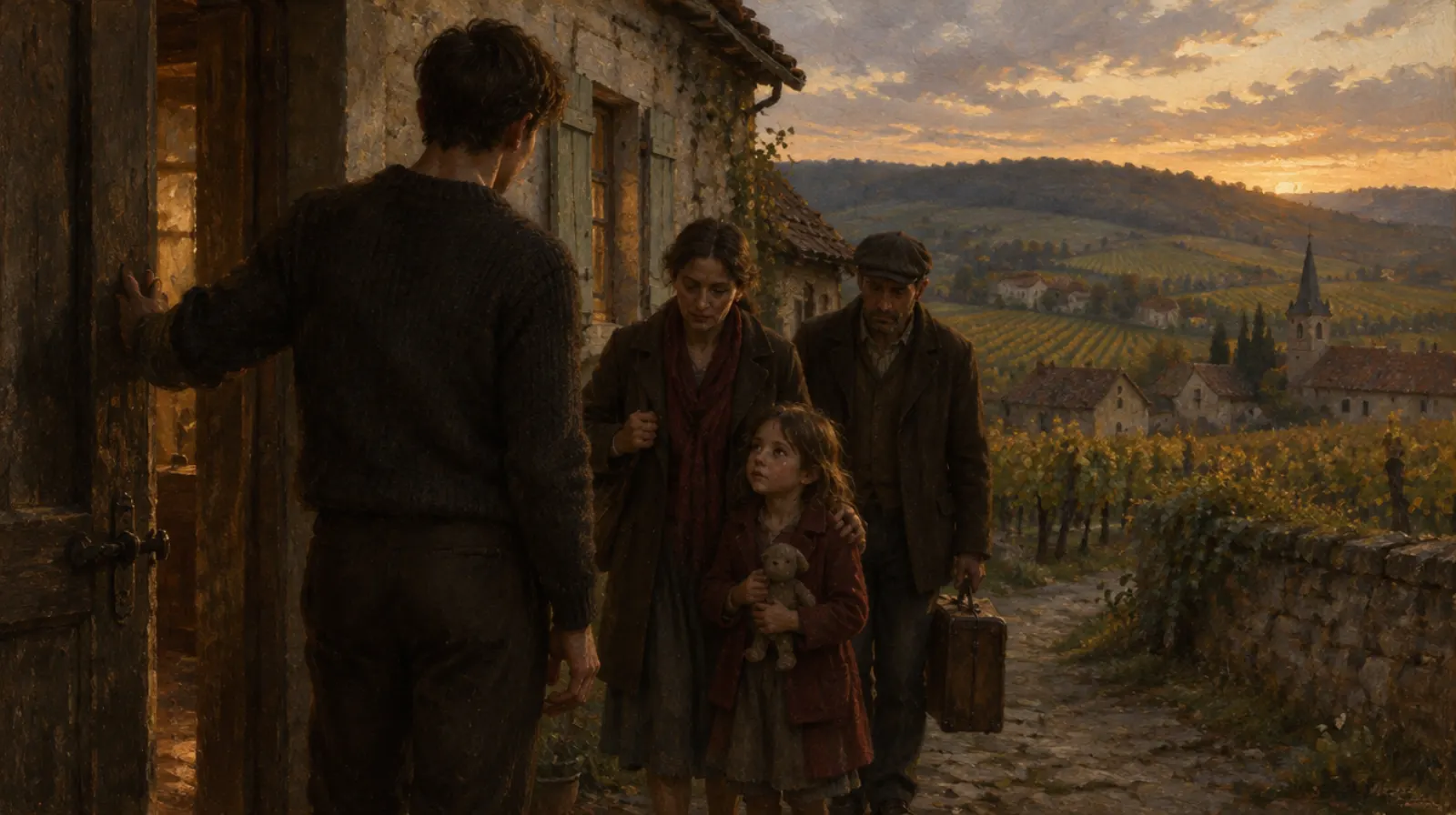
In 1940, the Nazi army took over the north of France. A line was drawn across the country. Many people tried to cross it to reach safety in the south, including Jewish families. Many had nowhere to stay.
A young Swiss man went looking for a house near that line, so he could take them in.
The house in Taizé
Roger Schutz was born in 1915 in Switzerland, the son of a Protestant pastor. In 1940, at twenty-five, he rode a bicycle into France. He wanted a place to pray, and to help people hurt by the war.
In a tiny, half-empty village in Burgundy, a region of eastern France, called Taizé, an old woman told him, "Stay here, we are so alone." He bought a large, run-down house there.
The village was close to the line between the part of France the Nazis held and the part that was still free. With his sister Geneviève, Roger hid refugees in the house, including Jewish people trying to escape. The family he lived with prayed together, but Roger prayed alone in his room so that no guest would feel pressured.
In the fall of 1942, he was warned that the police were coming. He was away in Switzerland when they searched the house, and he could not return until 1944.
Caring for the enemy
When Roger came back after the war, there were two camps near Taizé holding German prisoners of war. After years of war, many people in France were angry and grieving.
Roger and the first brothers who had joined him invited prisoners to their house for meals and prayer. They also took in children who had lost their parents in the war.
A community of brothers
In 1949, the first seven brothers committed to living together for life in prayer, simplicity and service. The Taizé community grew to include brothers from many churches and countries. Young people began coming to pray with them. Today tens of thousands visit every year.
In 2005, when Roger was ninety, a woman who was mentally ill attacked him during evening prayer, and he died. The brothers said they forgave her.
Why he did it
Jesus said that welcoming a stranger was welcoming him.
For I was an hungred, and ye gave me meat: I was thirsty, and ye gave me drink: I was a stranger, and ye took me in:
Matthew 25:35 · King James VersionThe original Greek
ἐπείνασα γὰρ καὶ ἐδώκατέ μοι φαγεῖν, ἐδίψησα καὶ ἐποτίσατέ με, ξένος ἤμην καὶ συνηγάγετέ με,
Found in Codex Vaticanus (about AD 325), Codex Sinaiticus (about AD 350).
And he told his followers to love their enemies too. Roger did both, in the same house.
What it means for us
Roger welcomed refugees during the war and enemy soldiers after it. Most of us find it hard enough to welcome people we simply disagree with. That is honest.
But his story shows that a home can be a place of peace in a frightened time. If you open your door, or your table, to someone who feels unwelcome, you are doing what he did in that old house in Taizé.