When the Nazis, the party that ruled Germany, took control of France during World War II, Jewish families were in terrible danger. Many tried to run. Few places were willing to take them in.
High in the mountains of southern France, one village said yes.
A village that remembered
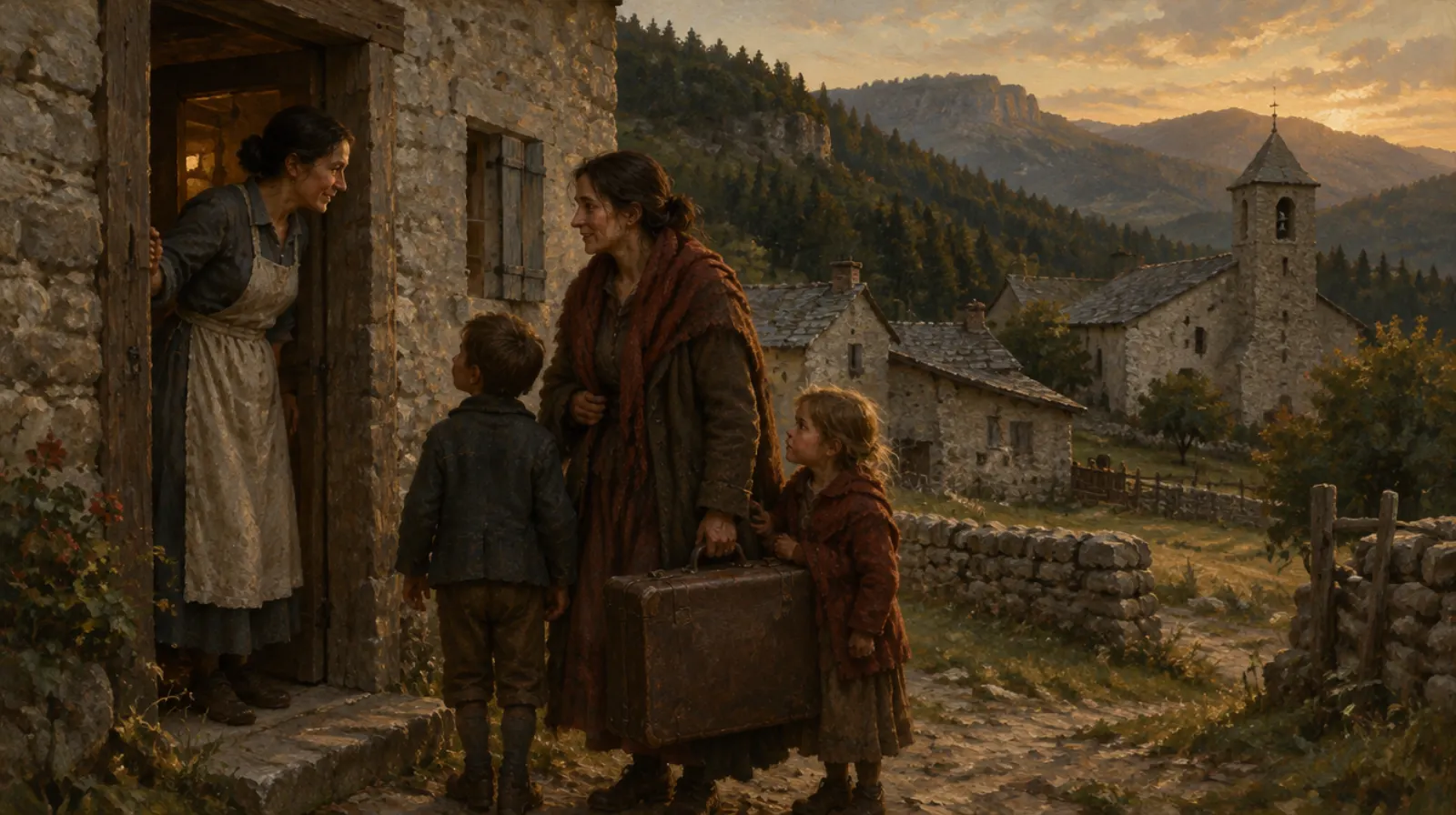
Le Chambon-sur-Lignon sits on a high, cold plateau surrounded by pine forests. Most of the people there were Huguenots, French Protestants. Hundreds of years earlier, their own ancestors had been hunted and killed for their faith. They had not forgotten what it was like to need a place to hide.
The village pastor was André Trocmé. His wife, Magda, was a practical, warm woman who ran their home and much of the work. Together with another pastor, Édouard Theis, they preached that Christians must help the people being hunted.
The knock at the door
The story people tell most often begins with a knock on the Trocmés' door in the winter of 1940. A frightened woman stood outside in the snow. She was Jewish and asked if she could come in. Magda said yes.
After that, the refugees kept coming. Families on the plateau hid them in farmhouses, attics, barns and boarding schools. Children were given false names and sent to the local schools. People forged papers and led refugees across the mountains to Switzerland. Almost no one in the area talked, even under pressure.
Over four years, the village and the farms around it sheltered thousands of people. Many of them were Jewish children, frightened and far from their parents, who found people willing to love them.
The cost
The work was dangerous. In 1943, André Trocmé and Édouard Theis were arrested and held in a camp for weeks. André's cousin, Daniel Trocmé, who ran a home for refugee children, was arrested and died in a Nazi camp in 1944.
Still, the village kept going.
In 1990, Yad Vashem, Israel's memorial to the victims of the Holocaust, gave the people of the area a rare honor. It recognized not only individuals, but the whole community, as Righteous Among the Nations.
Why they did it
Many villagers later said they did not see themselves as heroes. Helping was simply what a Christian should do. Jesus had said it plainly.
For I was an hungred, and ye gave me meat: I was thirsty, and ye gave me drink: I was a stranger, and ye took me in:
Matthew 25:35 · King James VersionThe original Greek
ἐπείνασα γὰρ καὶ ἐδώκατέ μοι φαγεῖν, ἐδίψησα καὶ ἐποτίσατέ με, ξένος ἤμην καὶ συνηγάγετέ με,
Found in Codex Vaticanus (about AD 325), Codex Sinaiticus (about AD 350).
To the people of Le Chambon, the stranger at the door was the one Jesus meant.
What it means for us
Most churches in Europe did not do this. We have to be honest about that. But one village of ordinary farmers and teachers shows what a whole church can do when it decides together that strangers in danger are its own.
You do not need a whole village to start. If you open your door to one person who needs it, you are doing what Magda did on a snowy night in 1940.