Today, when there is a war or a disaster, we expect someone to show up and care for the wounded, no matter which side they are on. That idea is not as old as it seems. It started with one man who could not walk past.
A battle in Italy
Henry Dunant was a businessman from Geneva, a city in Switzerland. He was a Christian who had helped start a Christian young men's group there, and he cared about the poor.
In June 1859, he was traveling on business in northern Italy, a country in southern Europe. He arrived near the town of Solferino just after a huge battle between the armies of France and Austria. In one day, tens of thousands of men had been killed or wounded.
The wounded lay in fields and roads, in the summer heat, with almost no one to help them. The armies did not have enough doctors.
All brothers
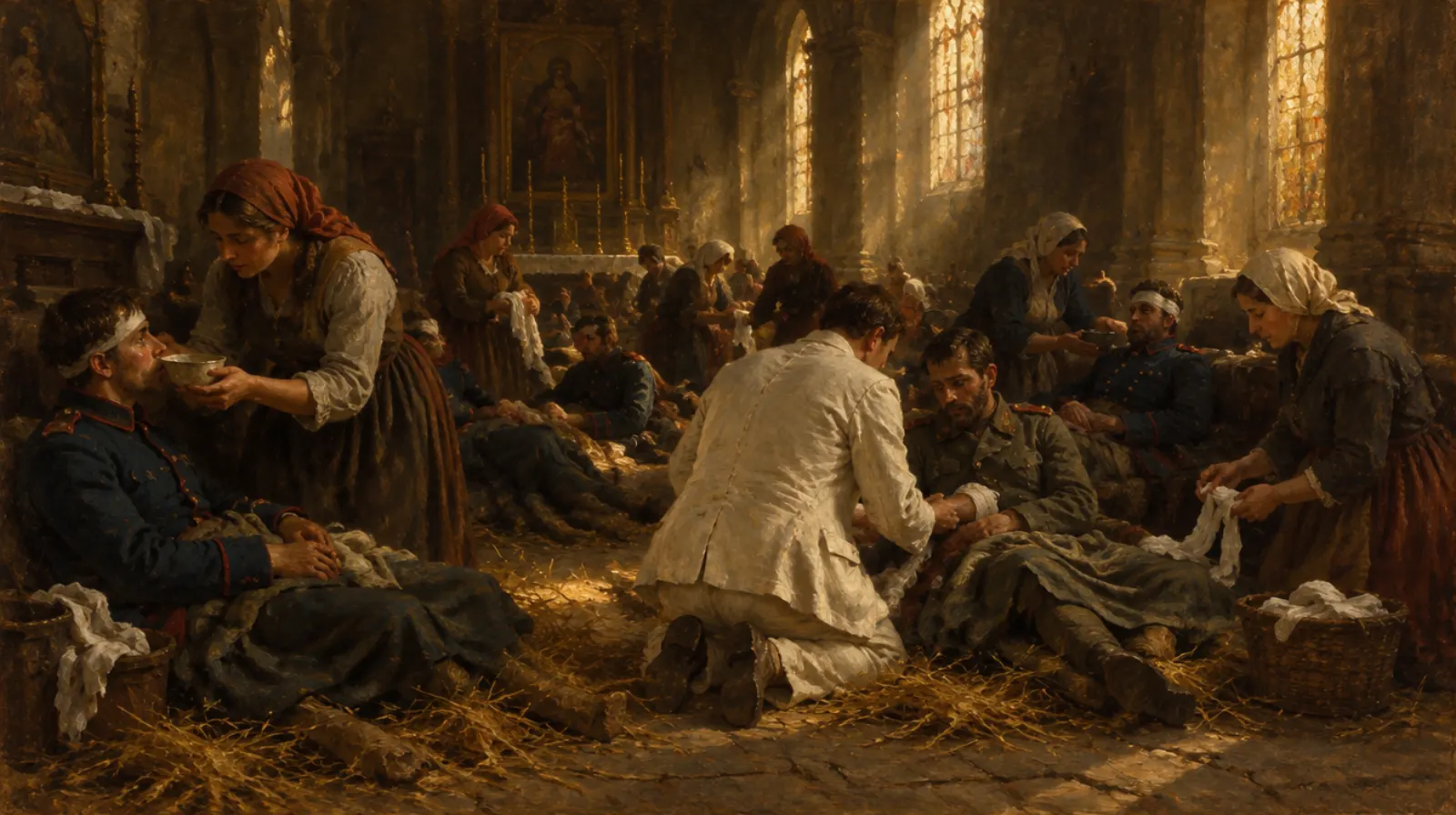
Dunant did not keep traveling. He stayed in the nearby town of Castiglione and organized the local people, many of them women, to care for the wounded. They brought water, food and bandages. They wrote letters for dying soldiers.
And they cared for men from both armies, enemies alike. The local women had a saying for it, "Tutti fratelli," which is Italian for "all brothers."
A book that changed the world
Dunant went home, but he could not forget. In 1862 he wrote a book called A Memory of Solferino. He asked a simple question: why not have trained volunteers, in every country, ready to care for the wounded in any war, protected by all sides?
People listened. In 1863, a committee in Geneva was formed that became the International Committee of the Red Cross. In 1864, countries signed the first Geneva Convention, promising to protect the wounded and the people caring for them.
In 1901, Dunant was one of the first two people ever given the Nobel Peace Prize.
What it means for us
Jesus said to love your enemies, and he healed a man in the crowd that came to arrest him. Dunant and the women of Castiglione lived that out in a field full of wounded men. They did not ask which side anyone was on.
We are not always that brave. But mercy that does not check sides is still possible. It might start with someone in your life who is on the other side of an argument, or a divide. If you care for them anyway, you are making the same choice those villagers made.