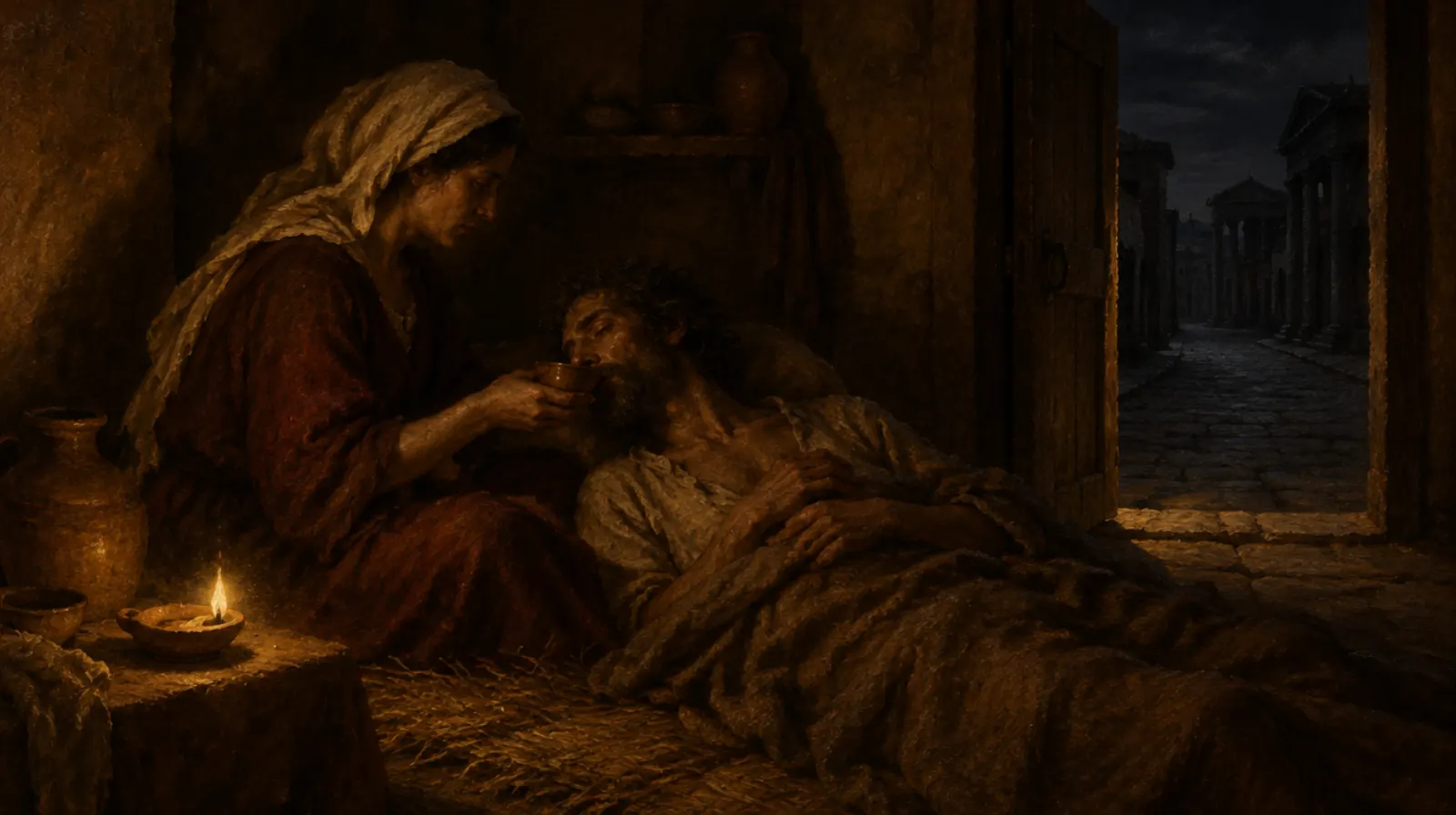
When a sickness spreads, everyone is afraid. That is human. We all remember how scared we felt when a virus closed the world. In the early church, there was a plague so bad that whole towns emptied. And some Christians made a hard choice.
The plague
Around the year 250, a deadly sickness spread across the Roman Empire, the huge country that ruled most of the lands around the Mediterranean Sea. It lasted for years. Today it is often called the Plague of Cyprian, after a bishop in North Africa who wrote about it.
People were terrified, and many left sick family members behind and ran. It is hard to blame them. Nobody knew how the sickness spread, and nobody had medicine for it.
The ones who stayed
In the big city of Alexandria, in Egypt, a bishop named Dionysius wrote a letter during the plague. A historian named Eusebius saved it in his history of the church.
Dionysius wrote that many Christians stayed. They visited the sick and took care of them. They held the dying and washed and buried the dead. And many of them caught the sickness and died too. He wrote about them with love and grief, because they were his friends.
Cyprian, the bishop in North Africa, told his church to care for everyone who was sick, not only other Christians. He said that was what loving your enemy meant.
What an emperor noticed
About a hundred years later, a Roman emperor named Julian wanted to bring back the old Roman gods. He wrote a letter to one of his priests. In it, he complained that the Christians were winning people over by being kind. He said they fed their own poor, and the poor of everyone else too.
He meant it as a complaint. But it tells us, from someone who did not like them, what those Christians were doing.
What it means for us
Not every Christian was brave, then or now. Many of us would have been afraid too. But these people show what mercy can look like when it costs something.
Most of us will never face a plague like that. But you will know someone sick, lonely or scared. If you bring them a meal or call them, you are part of the same long story. It started with Jesus, and it is still going.